

Biomass Gasification Technology: A Comprehensive Overview
Principles, Reactor Types, Key Parameters, and Industrial Implementation
1. Introduction: The Role of Biomass Gasification in the Energy Transition
Biomass gasification is a mature thermochemical conversion process that transforms solid biomass feedstocks into a combustible gas mixture known as syngas (synthesis gas) or producer gas. As a low-carbon alternative to fossil fuels, the process typically operates at temperatures between 800–1,100 °C using heat, steam, and a controlled supply of oxygen. The resulting syngas—primarily composed of carbon monoxide (CO), hydrogen (H₂), carbon dioxide (CO₂), methane (CH₄), and nitrogen (N₂) when air is used—can be utilized for renewable power generation, industrial process heat, and the synthesis of biofuels and chemicals. When integrated with carbon capture (BECCS), biomass gasification offers a pathway to negative greenhouse gas emissions, directly supporting global climate targets.
The global biomass gasification market was valued at approximately USD 39.53 billion in 2025 and is projected to reach USD 64.80 billion by 2032, growing at a CAGR of 7.31% 360iResearch, 2026. Policy support is also strengthening technology development: China’s 14th Five-Year Plan for Science and Technology Innovation in the Energy Sector includes biomass among the advanced renewable energy areas covered by technology roadmaps and demonstration projects IEA. Together, these market and policy signals provide the broader context for the reactor types, operating parameters, and syngas characteristics discussed in the following sections.
2. Fundamental Principles of Biomass Gasification
Biomass gasification involves partial oxidation at elevated temperatures under sub-stoichiometric oxygen conditions. Because less oxygen is supplied than required for complete combustion, the carbon in the biomass is only partially oxidized. The feedstock undergoes four overlapping thermochemical stages:
Drying (100–200 °C): Free moisture is evaporated.
Pyrolysis (200–700 °C): Macromolecules decompose into volatile gases, tars, and solid char.
Oxidation (exothermic): A portion of the char combusts with the limited air supply, generating heat via C + O₂ → CO₂.
Reduction (endothermic): CO₂ and H₂O react with incandescent char to produce fuel gases via:
Boudouard Reaction: C + CO₂ → 2CO
Water-Gas Reaction: C + H₂O → CO + H₂
Water-Gas Shift Reaction: CO + H₂O → CO₂ + H₂
The syngas heating value depends on the gasifying agent: air-blown gas yields 4–6 MJ/Nm³; oxygen-blown yields 10–15 MJ/Nm³; steam gasification produces hydrogen-rich syngas with 15–20 MJ/Nm³.
-
TFBG Series (Twin-Fire Fixed Bed)

-
UFBG Series (Updraft Fixed Bed)

-
CFBG Series (Circulating Fluidized Bed)

-
DFBG-BC/B Series (Downdraft Fixed Bed)

3. Gasifier Types: Classification and Comparative Analysis
Biomass gasifiers are categorized into three principal families based on the gas–solid contacting mode. Each configuration exhibits distinct performance characteristics suitable for different scales and applications.
| Attribute | Fixed-Bed Updraft | Fixed-Bed Downdraft | Fluidized Bed (BFB/CFB) | Entrained Flow | Rotary Kiln |
|---|---|---|---|---|---|
| Typical Capacity | 10 kW–5 MW | 10 kW–2 MW | 5 MW–200 MW | >100 MW | Pilot to commercial |
| Operating Temperature | 300–1,000 °C | 800–1,100 °C | 750–950 °C | 1,200–1,600 °C | 500–900 °C |
| Tar Content (g/Nm³) | 50–100 | <0.1–1 | ~10 | <0.01 | Moderate–high |
| Feedstock Flexibility | High moisture tolerance | Stringent size/moisture | High ash tolerance | Requires pulverization | Handles heterogeneous wastes |
| Primary Application | Thermal/heating | Engine power generation | Large-scale CHP, IGCC | Syngas for chemicals | Waste-to-energy, niche feedstocks |
Industrial Implementation: Wuxi Powermax Renewable Energy Technology Co., Ltd. provides commercially proven systems across the fixed-bed and fluidized-bed spectrum: DFBG Series (Downdraft Fixed Bed, 50–1,000 kW), UFBG Series (Updraft Fixed Bed, 50–2,000 kW), and CFBG Series (Circulating Fluidized Bed, 200–20,000 kW). These modular solutions enable project developers to select the optimal technology based on feedstock characteristics and end-use requirements.
4. Critical Operating Parameters
Equivalence Ratio (ER): Optimal ER for air gasification is ~0.37, balancing flammable gas yield and tar minimization.
Temperature: Cold gas efficiency peaks around 750–800 °C; effective tar cracking requires >800 °C. Modern systems maintain 800–1,100 °C for balanced performance.
Moisture Content: Excess moisture reduces efficiency and impairs tar cracking. Limits range from ≤16% for downdraft to ≤35% for updraft units.
5. Advanced Technologies and Emerging Frontiers
Ongoing innovation is expanding the operational envelope of biomass gasification through several emerging technologies that align with trends highlighted in industry reviews and research roadmaps.
Catalytic Tar Reforming: Nickel-based catalysts, dolomite, and zeolites achieve up to 98–100% tar removal efficiency while enhancing hydrogen yield.
Chemical Looping Gasification (CLG): Metal oxide oxygen carriers eliminate air separation units and inherently capture CO₂.
Sorption-Enhanced Gasification (SEG): In-situ CO₂ capture shifts equilibrium toward hydrogen-rich syngas.
Plasma-Assisted Gasification: Steam plasma configurations achieve 95% carbon conversion and H₂/CO ratios exceeding 1.0.
Supercritical Water Gasification (SCWG): Enables direct gasification of wet biomass (>80% moisture) without energy-intensive drying.
Absorption-Enhanced Reforming (AER): Boosts H₂ purity by integrating CO₂ sorption directly into the reforming step.
Biomass Gasification with SOFC: Hybrid systems demonstrate electrical efficiency of 40–60%, substantially exceeding conventional engine-based generation.
With a Technology Readiness Level (TRL) of 8–9 across core configurations, biomass gasification is proven for large-scale commercial deployment [Biofuels, Bioproducts and Biorefining, 2023], with gasification and methanol synthesis reaching TRL 9 [Studio Gear Up, 2023]. Innovations are projected to increase efficiency by ~25% and reduce emissions by ~40% relative to conventional approaches.
6. Industrial Applications
| Application | Typical Syngas Use | Relevant Gasifier Types |
|---|---|---|
| Rural Electrification | Engine-based power (10 kW–2 MW) | Downdraft fixed-bed |
| Industrial Cogeneration (CHP) | Combined heat and power | Fluidized bed, Downdraft |
| Grid-Connected Power | Gas turbine or IGCC (>20 MW) | CFB, Entrained flow |
| Synthetic Natural Gas (Bio-SNG) | Methanation of syngas | Fluidized bed (dual) |
| Green Chemicals | Methanol, DME, FT liquids | Entrained flow, CFB |
| Waste-to-Energy | MSW, RDF, industrial waste | Fluidized bed, Rotary kiln |
-
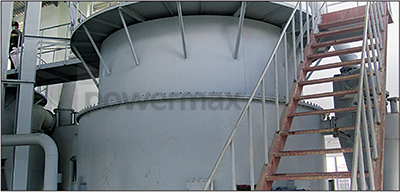
1MW DFBG Power Plant
-
1MW UFBG Power Plant

-
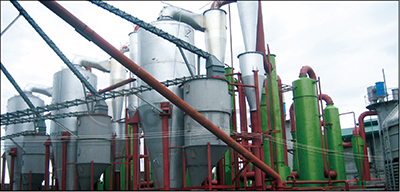
3MW CFBG Power Plant
-
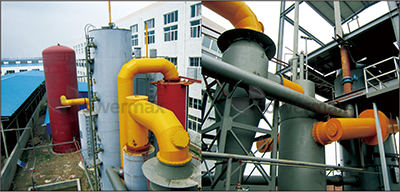
2MW TFBG Power Plant
7. Technology Provider Spotlight: Wuxi Powermax Renewable Energy Technology Co., Ltd.
Wuxi Powermax Renewable Energy Technology Co., Ltd. , headquartered in Wuxi, Jiangsu, China, is a leading global provider of integrated biomass and waste gasification solutions.
Core Gasifier Product Lines:
| Series | Gasifier Type | Capacity Range | Key Feedstock Specifications |
|---|---|---|---|
| DFBG Series | Downdraft Fixed Bed | 50–1,000 kW | Moisture ≤16%, Size <1 cm |
| UFBG Series | Updraft Fixed Bed | 50–2,000 kW | Moisture ≤35%, Size 20–80 mm |
| CFBG Series | Circulating Fluidized Bed | 200–20,000 kW | Moisture ≤20%, Size ≤8–15 mm |
| TFBG Series | Twin-Fire Fixed Bed | 50–2,000 kW | Moisture ≤35%, Size 10–80 mm |
Powermax systems are complemented by custom-designed generator sets utilizing Siemens alternator technology, dry and semi-dry gas purification systems, and turnkey EPC solutions. Contact: info@powermaxgasifiers.com or +86-510-68229610.
8. Conclusion
Biomass gasification is a mature, commercially proven technology offering a flexible, low-carbon pathway for power generation, heating, and chemical production. The diversity of available gasifier configurations—from downdraft units for distributed power to CFB systems for utility-scale CHP—enables tailored solutions across feedstock types and project scales.
Emerging innovations in catalytic reforming, plasma-assisted conversion, and sorption-enhanced processing continue to push efficiency boundaries. When integrated with carbon capture, biomass gasification can deliver negative carbon emissions, aligning with net-zero climate targets.
For industrial stakeholders, selecting a qualified technology partner such as Wuxi Powermax Renewable Energy Technology Co., Ltd. ensures access to reliable, field-proven gasification systems and comprehensive project support.
FAQ
1. What is biomass gasification technology?
Biomass gasification technology is a thermochemical conversion process that transforms solid biomass into combustible syngas, providing a low-carbon alternative to fossil fuels.
2. How does biomass gasification work?
Biomass gasification works by partially oxidizing biomass at high temperatures under limited oxygen conditions, converting it through drying, pyrolysis, oxidation, and reduction stages into combustible syngas.
3. What is syngas in biomass gasification?
Syngas is a combustible synthesis gas produced during biomass gasification, consisting mainly of CO and H₂, with applications in renewable power generation, industrial heat, biofuels, and chemical production.
4. What are the advantages of biomass gasification compared with combustion?
Biomass gasification provides advantages over combustion by converting biomass into valuable syngas with lower emissions and greater energy flexibility for renewable power, industrial heat, and chemical production.
5. What can biomass gasification systems be used for?
Biomass gasification systems are used to convert biomass into syngas for applications including renewable electricity generation, industrial heating, CHP systems, biofuel and chemical production, and waste-to-energy projects.